

By using our website, you agree to the use of cookies as described in our Cookie Policy
Medical Services Available at Adult Day Care Centers in Baltimore
Most families think day programs are just about supervision. Keep someone safe, give them lunch, send them home. But the medical backbone running through Baltimore's adult medical daycare centers is far more sophisticated than that — and if you're not tapping into it, you're missing half the value. These facilities don't just watch your loved one. They monitor, treat, and coordinate care in ways that can prevent hospitalizations and keep chronic conditions from spiraling out of control.
Here's what matters. If you're relying on day care to bridge the gap between home and full-time nursing care, you need to know exactly what medical support is on the table. Not every center offers the same services. Not every family understands what's available until they need it. And by then, it's often too late to course-correct.
Initial Screenings That Actually Catch Things Early
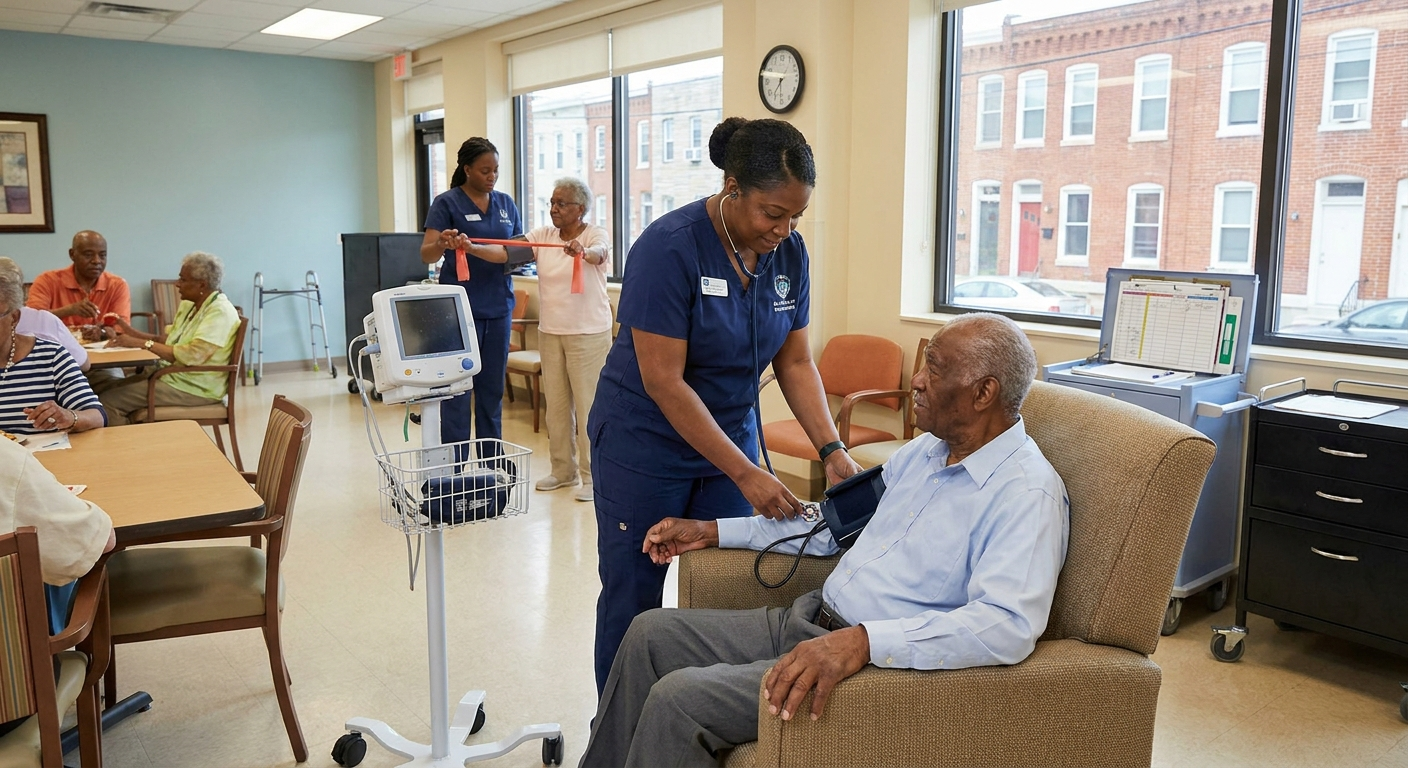
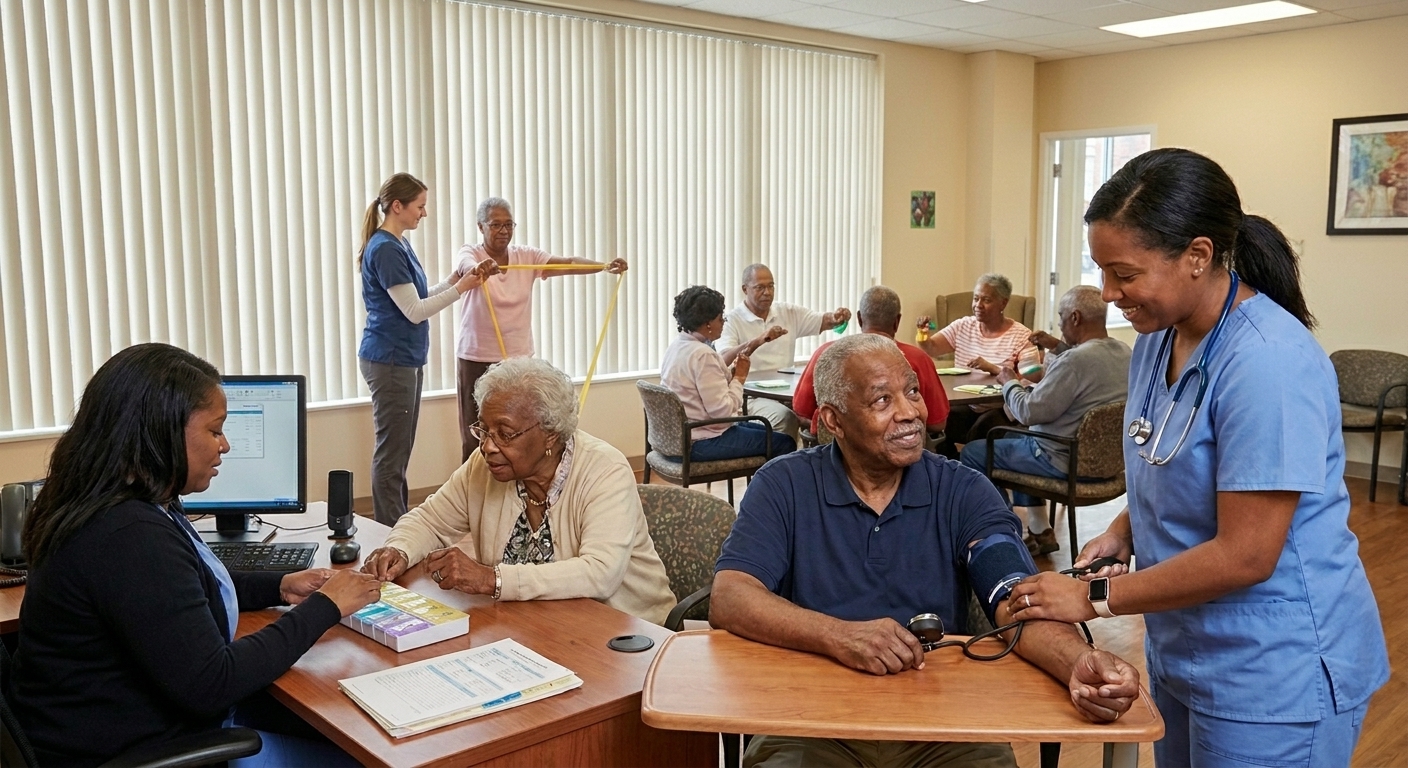
Walk into most Baltimore centers and your loved one won't just fill out paperwork. They'll sit down with a licensed nurse who runs through a full health evaluation. Vital signs, medical history, cognitive function, mobility — it all gets documented and tracked over time. These aren't token checkups. They're diagnostic snapshots that help staff spot changes before they become emergencies.
When those baselines are in place, it's easier to notice a drop in blood pressure, a shift in mood, or a new pattern of confusion. Catching those flags early often means adjusting a medication or looping in a doctor before the issue lands someone in the ER. We've seen it play out dozens of times. A routine assessment flags something off, the nurse escalates it, and the participant avoids a crisis that could've lasted weeks.
Someone Actually Watching the Pills
Medication management isn't glamorous, but it's one of the highest-value services these centers provide. Seniors juggling five, seven, ten prescriptions often lose track. They double-dose. They skip doses. They mix up bottles. At a day care center, trained staff handle the entire process — dispensing meds on schedule, watching for side effects, and documenting every dose.
If something doesn't look right, they don't wait. They call the prescribing physician or flag the family. That kind of oversight reduces hospitalizations tied to medication errors, which are far more common than most people realize. And if your loved one's care plan changes — new prescriptions, adjusted dosages — the center updates their protocols in real time.
Nursing Care Without the Hospital Price Tag
Many Baltimore centers employ RNs or LPNs who deliver hands-on medical care throughout the day. We're talking wound dressing, blood glucose monitoring, catheter maintenance, oxygen support — procedures that would otherwise require clinic visits or home health aides. Having that level of care embedded in the day program means continuity. It means fewer disruptions. And it means your loved one isn't bouncing between appointments just to get basic medical needs met.
Skilled nursing also covers emergency response. If someone has a fall, shows signs of a stroke, or experiences sudden chest pain, there's a licensed professional on-site who can assess and act immediately. That's not something you get with a standard senior social program, and it's a distinction that matters when seconds count.
Therapy Services Built Into the Schedule
Rehabilitation doesn't have to mean a separate facility or a long waiting list. Many adult day care centers in Baltimore bring physical, occupational, and speech therapists right into the building. Participants work on mobility, balance, fine motor skills, and communication — often multiple times per week — without leaving the program.
Here's what that looks like in practice:
- Physical therapy to rebuild strength after surgery or manage arthritis pain
- Occupational therapy to relearn daily tasks like dressing, grooming, or eating independently
- Speech therapy to address swallowing issues or language loss from stroke
- Custom exercise plans designed around each participant's limitations and goals
- Progress tracking shared directly with the family and primary care team
This integrated model keeps therapy from feeling like an added burden. It's woven into the day, delivered by professionals who already know the participant, and coordinated with the rest of their care plan.
Chronic Conditions Don't Get Ignored
Diabetes, hypertension, COPD, heart failure — these aren't conditions that take a day off. Baltimore's adult day care centers treat chronic disease management as an ongoing priority, not a side task. Staff monitor blood sugar levels, check blood pressure, watch for fluid retention, and adjust care plans based on what they observe.
Education plays a role here too. Participants and families receive guidance on diet, exercise, warning signs, and when to escalate concerns. It's proactive care, not reactive. And when someone's condition is stable because they're getting consistent attention five days a week, the difference shows up in fewer hospital admissions and better long-term outcomes.
Wellness Programs That Go Beyond Bingo
Medical services aren't just about treating problems. They're also about preventing them. Centers across Baltimore run wellness initiatives that focus on nutrition, fitness, mental health, and preventive care. These aren't token activities. They're structured programs led by professionals who understand aging and disability.
Some examples we see across the city:
- Guided exercise classes tailored to different mobility levels
- Nutritional counseling for managing weight, diabetes, or heart health
- Blood pressure and cholesterol screenings offered on-site
- Flu shots and other immunizations administered during the day
- Mental health check-ins and cognitive stimulation activities
The goal is to keep participants as independent and healthy as possible for as long as possible. And the data backs it up — people who engage in regular wellness programming tend to have fewer declines in function over time.
Coordination That Keeps Everyone on the Same Page
One of the most underrated medical services at adult day care centers is care coordination. Staff don't operate in a silo. They communicate regularly with primary care doctors, specialists, pharmacies, and family members. If a participant needs a referral, the center helps arrange it. If test results come back, the nurse reviews them and follows up. If a medication changes, everyone involved gets the update.
This kind of coordination prevents the gaps that often lead to bad outcomes. No one's left wondering who's responsible for following up on a lab order or whether the cardiologist knows about the new prescription from the neurologist. The center acts as a hub, and that structure alone can prevent serious mistakes.
Emergency Protocols That Actually Work
Medical emergencies happen. Falls, heart attacks, diabetic crises — they don't wait for convenient timing. Baltimore adult day care centers are required to have emergency response plans in place, and the good ones take that seriously. Staff are trained in CPR and first aid. Emergency contact information is updated and accessible. Protocols for calling 911 or transporting someone to the hospital are clear and practiced.
What that means for families:
- Someone trained to assess the situation is present when an emergency occurs
- Staff can provide critical information to paramedics or ER doctors immediately
- Families are notified right away with accurate details
- Documentation is thorough, which helps with follow-up care and insurance claims
- Participants aren't left alone or confused during a crisis
It's not just about reacting. It's about reacting correctly. And in a medical emergency, that difference can be everything.
Support That Extends Beyond the Building
Baltimore's adult day care centers don't shut off the care when participants go home. Many offer resources for family caregivers — education sessions, support groups, referrals to home health agencies, and guidance on navigating Medicare or Medicaid benefits. They understand that medical care doesn't stop at 4 p.m., and they help families manage what happens in between.
Some centers also coordinate with home care providers to ensure consistency. If your loved one receives physical therapy at the center and also works with a home health aide, the center shares notes and progress updates. That kind of collaboration keeps everyone working toward the same goals and prevents duplication or conflicting advice.
Medical Services Are the Foundation
Adult day care in Baltimore isn't just daycare for older adults. It's a medical safety net that prevents decline, manages complexity, and gives families confidence that their loved ones are getting real, professional care. The services are there. The staff are trained. The infrastructure works. But only if you know what to ask for and how to use it. Don't settle for a program that offers activities and lunch. Find one that offers nursing, therapy, monitoring, and coordination — because that's where the real value lives. For those interested in exploring options, we encourage you to schedule a tour, review our admissions process, or visit specific locations like Alice Manor Adult Daycare or Adult Medical Daycare of Overlea.
Let’s Take the Next Step Together
We know how important it is to find a place that truly supports your loved one’s health and well-being every single day. If you’re ready to see firsthand how our medical services can make a difference, let’s connect. Call us at 410-444-5800 or schedule a tour and discover how we can help your family thrive with confidence and peace of mind.
‹ Back